
social-cards\blog-loto-padMeta Description: Choosing the right LOTO padlocks can mean the difference between a safe shutdown and a serious accident. This guide covers padlock types, key systems, OSHA requirements, and how to build a padlock program that works.
Why Padlock Selection Matters
In any Lockout/Tagout (LOTO) program, the padlock is the front line of defense. It’s the physical barrier that prevents accidental re-energization of machinery during maintenance. But not all padlocks are created equal — and choosing the wrong one can introduce risks that defeat the purpose of LOTO entirely.
According to OSHA standard 29 CFR 1910.147, lockout devices must be “substantial enough to prevent removal without the use of excessive force or unusual techniques.” That means a cheap, generic padlock from a hardware store isn’t enough. You need industrial-grade locks designed for the specific demands of LOTO.
1. Types of Industrial Safety Padlocks
🔸 Nylon/Composite Padlocks
The most popular choice for modern LOTO programs. Made from reinforced nylon with non-conductive, non-sparking properties.
Best for: General industrial use, electrical work, chemical environments
Key feature: Temperature resistant from -20°C to +177°C
Colors available: Up to 10 standard colors for color-coded safety management
🔸 Steel Shackle Padlocks
Nylon body with a hardened steel shackle (6mm diameter). Offers additional cut resistance.
Best for: Heavy-duty applications, outdoor environments, high-security areas
Key feature: Hardened steel shackle resists cutting and sawing
🔸 Stainless Steel Padlocks
Full stainless steel construction for extreme environments.
Best for: Food processing, pharmaceutical, marine/offshore, corrosive environments
Key feature: Corrosion-resistant, washdown-capable
🔸 Aluminum Shackle Padlocks
Lightweight option with good corrosion resistance.
Best for: Applications where weight matters, or where non-sparking properties are needed
Key feature: Lightweight, non-sparking
🔸 Micro/Small Padlocks
Compact padlocks for small energy isolation points.
Best for: Miniature breakers, small valves, control panel doors
Key feature: Fits tight spaces where standard padlocks won’t
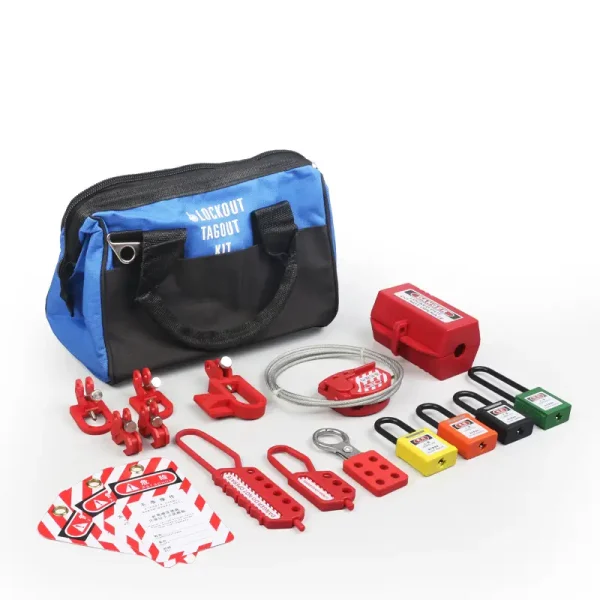
2. Understanding Key Systems
The key system you choose directly impacts the security and usability of your LOTO program.
Keyed Differ (KD)
Every padlock has a unique key. No two locks open with the same key. This is the OSHA-recommended standard — one employee = one padlock = one key.
Keyed Alike (KA)
A group of padlocks shares the same key. Useful for maintenance teams working on the same shift, but does not meet OSHA’s individual lockout requirements for multi-worker scenarios.
Differ & Master Key
Each padlock has a unique key, but a master key can open all locks in the system. Supervisors get master keys for emergency removal. This is the most common setup in large facilities.
Alike & Master Key
A group of locks share the same key, plus a master key can open them all. Suitable for department-level lockout programs.
⚠️ Important: ZX Safety padlocks support over 100,000 non-interchangeable key combinations (zinc alloy cylinder, 12-14 pins) — meaning each worker in your plant can have a truly unique key.
3. OSHA Requirements for LOTO Padlocks
OSHA 29 CFR 1910.147(c)(5)(iii) specifies that lockout devices must be:
| Requirement | What It Means |
|---|---|
| Durable | Able to withstand the environment and conditions of use |
| Standardized | Same color, shape, or size within a facility for easy recognition |
| Substantial | Cannot be removed without bolt cutters or other heavy tools |
| Identifiable | Clearly shows who the lock belongs to (name, ID, or asset tag) |
| Key-Retaining | Key cannot be removed while the shackle is open (prevents accidental key loss) |
Check your current padlocks: Do they meet all five criteria? If not, it’s time for an upgrade.
4. Color Coding: More Than Cosmetic
Color-coding padlocks is a simple but powerful way to organize your LOTO program:
| Color | Common Meaning |
|---|---|
| 🔴 Red | Danger / Do Not Operate |
| 🟡 Yellow | Caution / Maintenance in Progress |
| 🔵 Blue | Contractor Lock |
| 🟢 Green | Supervisor / Inspector Lock |
| ⚪ White | Electrical Isolation |
| 🟠 Orange | Temporary / Special Circumstances |
| 🟣 Purple | Confined Space Entry |
| ⚫ Black | Out of Service |
| 🟤 Brown | Chemical Isolation |
| 🔘 Gray | Spare / Pool Locks |
ZX Safety offers 10 standard colors — enough for even the most complex color-coding system.
5. Building Your Padlock Program
Here’s a step-by-step framework:
Step 1: Audit Your Current Setup
Walk through your facility and identify:
- How many isolation points need lockout devices?
- How many maintenance staff are working per shift?
- What types of energy sources exist (electrical, mechanical, pneumatic, chemical)?
Step 2: Choose Your Key System
Select the key system that fits your facility size. For plants with 50+ workers, a differ & master key system is usually the best balance of security and manageability.
Step 3: Color Code by Department or Role
Standardize colors across your facility so any worker can immediately identify the purpose of a lock at a glance.
Step 4: Pair with the Right Accessories
Padlocks don’t work alone. Combine with:
- Safety hasps for group lockout scenarios
- Lockout stations to keep locks organized and accessible
- Tags and labels for clear identification
Step 5: Train Your Team
A padlock program only works if workers use it correctly. Provide hands-on training on:
- Proper lock application and removal
- Key control procedures
- Emergency lock removal (supervisor master key protocol)
Step 6: Regular Inspection
Inspect padlocks quarterly for:
- Worn or sticky cylinders
- Damaged shackles or bodies
- Illegible labels or tags
- Missing keys
6. Common Padlock Mistakes and How to Avoid Them
| Mistake | Why It’s Dangerous | Fix |
|---|---|---|
| One key fits all | No individual accountability | Use keyed differ or differ & master key |
| No key-retaining feature | Keys get lost, locks get left unlocked | Only use key-retaining padlocks |
| Mixing brands and colors | Confusion during emergencies | Standardize one brand and color scheme |
| Worn cylinders not replaced | Lock can fail or be picked easily | Replace annually or when resistance is felt |
| Padlocks stored in a drawer | Workers waste time finding locks | Install lockout stations at key locations |
7. Why Choose ZX Safety Padlocks?
ZX Safety Products has been manufacturing industrial lockout devices since 2011. Our padlocks are trusted by automotive, petrochemical, and industrial transportation companies across Asia and beyond.
- 12-14 pin zinc alloy cylinders — 100,000+ non-interchangeable key combinations
- Reinforced nylon one-piece molded shell — impact, corrosion, and temperature resistant
- Auto-pop shackle function — shackle springs open when key is turned
- Key-retaining feature — key cannot be removed in open position
- Custom engraving — company logo, serial numbers, or color-coded key caps
- OSHA compliant — meets 29 CFR 1910.147 standards
Browse our full padlock range →
💡 Need help designing your LOTO program? ZX Safety offers customized solutions for facilities of any size. Contact us for a consultation.lock-guide.md